Skip to content
Admissions · What to expect

From your first day to your last, and after.

Not knowing what happens next makes a hard step harder. Here's the honest version of what treatment at Jasper Grove looks like — from the moment you walk in to the plan you leave with.

Your time here

Seven steps, one connected path.

No two stays look exactly alike — but the shape of the journey is the same. Here's how it goes.

A warm welcome

This comes first. When you arrive, our team walks you through orientation, answers your questions, and helps you settle in — no rush, no cold intake.

Medical detox, if you need it

If you're still in active use, you begin with medically supervised withdrawal management — 24/7 nursing and comfort medications through the hardest first days, to reduce the risks of withdrawal.

Into residential care

Once you're stable, you move straight into residential treatment — same program, same building, no second admission to arrange.

A plan built around you

Your treatment plan is built around your needs, not anyone else's — the substances, the history, and what recovery has to fit back into.

Therapy and daily structure

Individual and group therapy, with family education and involvement when clinically appropriate, plus evidence-based approaches — cognitive behavioral therapy (CBT), DBT-informed skills, and trauma-informed care — inside a steady daily rhythm.

Mental health, treated too

Depression, anxiety, post-traumatic stress (PTSD), and other co-occurring conditions are addressed alongside the addiction by an interdisciplinary team — counselors providing therapy, nurses providing nursing care and qualified medical providers handling medication and medical needs — rather than handed off elsewhere.

Aftercare, before you leave

A plan for what comes next takes shape during your stay — relapse-prevention, community support near home, continuing medication, and referrals — so you walk out with a plan, not just an ending.

How long you'll stay

As long as it takes, not a fixed clock.

Length of stay isn't a fixed clock — it's a clinical decision, shaped around your plan and your progress. We accept Indiana Medicaid and commercial insurance, and we verify your exact cost up front before you commit to anything.

Getting here

No ride? We help with that.

Transportation shouldn't be the reason you don't come in. We help arrange transportation for admission, necessary appointments during treatment, and post-discharge plans — so getting here, and getting home, is one less thing to solve alone.

Your first day

Arriving for treatment.

Patients are encouraged to arrange transportation rather than drive to the facility. Patients who bring a vehicle should park in the extended lot adjacent to the main parking lot.

If family is coming to see you later, visiting hours, visitor parking and belongings pickup are on one page. Visiting Jasper Grove
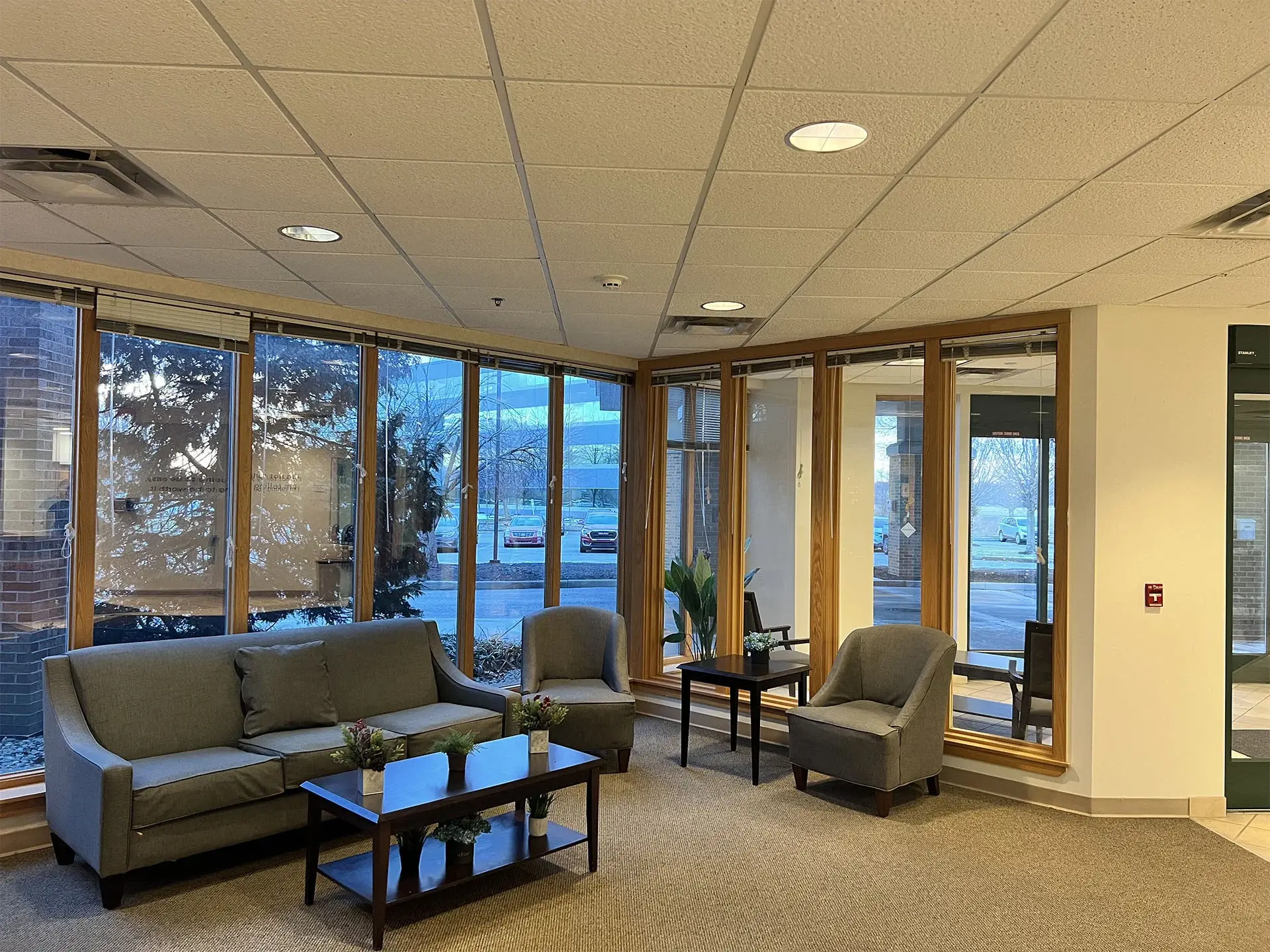
The reception area at Jasper Grove Recovery in Indianapolis — armchairs and a sofa by floor-to-ceiling windows looking onto trees.
Where you'll be

This is the room you walk into.

No stock photography, no other facility's building. This is Jasper Grove on Digital Way, on the northwest side of Indianapolis — the reception area, where admissions meets you whatever time you arrive.

Common questions

What to expect, answered.

What happens on the first phone call?
An assessment — what you've been using and how much, what happens when you stop, your medical and mental-health history, and your situation at home. Admissions also verifies your insurance during or right after that call. It takes as long as it takes, and it isn't a commitment.
How quickly can I be admitted?
Often the same day. Authorization can come back as fast as same day depending on your plan, and admissions answers 24/7 — so the process can start whatever time you're ready.
What if I'm still using when I call?
Call anyway. Being in active use is the normal state of someone calling a treatment center, not a disqualification, and it's clinically relevant information for planning your detox. What matters is being straight about what you've taken and when.
Will someone pick me up?
We help arrange transportation for admission, for necessary appointments during treatment, and after discharge. Not having a ride shouldn't be the reason you don't come in — tell admissions and they'll help arrange it.
Can I drive myself? Where do I park?
Patients are encouraged to arrange transportation rather than drive to the facility. Patients who bring a vehicle should park in the extended lot adjacent to the main parking lot.
Can my family visit?
Approved visitors may visit on Fridays from 3:00 to 5:00 p.m. Patients may request a visit after their first seven days here. Visits are scheduled through the patient's counselor. Every visitor must be approved and have a valid Release of Information authorization on file, and patients may also coordinate their approved visitors with their counselor. Visitor parking and belongings pickup are covered on the visiting page.
What should I bring?
Photo ID, your insurance or Medicaid card, and any prescription medications in their original labeled bottles, plus comfortable clothes and basic toiletries. Admissions will give you the full list, including what not to bring, before you arrive.
Can I bring my phone?
Phones, laptops, tablets and other devices with cameras are stored securely during your stay to protect everyone's privacy. Calls with people you've authorized are scheduled around treatment activities.
What happens if I want to leave?
You can. Residential treatment is voluntary, and nobody is held. If you're thinking about leaving, say so — that conversation is part of the work, and it's usually happening for a reason worth understanding before you act on it.
Take the next step

Ready for the first step, or just have questions?

Either way, start with a call. Admissions answers 24/7 — we'll talk through what to expect and verify your coverage first.